In the competitive retro arcade community, no debate is more fierce than display technology choice: preserving native Cathode Ray Tube (CRT) monitors versus adopting modern ultra-low-latency LCD and OLED panels powered by hardware video scalers like the OSSC Pro and RetroTINK-4K.
1. THE PHYSICS OF CRT CRT DISPLAY LATENCY
Original coin-operated arcade games designed between 1978 and 1999 outputted analog video signals at 15.75 kHz horizontal frequency and ~60 Hz vertical refresh rate. In a CRT display, an electron gun sweeps line-by-line directly onto phosphor coatings inside a glass vacuum tube.
Because there is zero digital frame buffering or analog-to-digital conversion, the signal latency from the arcade PCB logic board to visual photon emission on screen is practically 0.0 milliseconds.
2. SCANLINES & PHOSPHOR DECAY BLEND
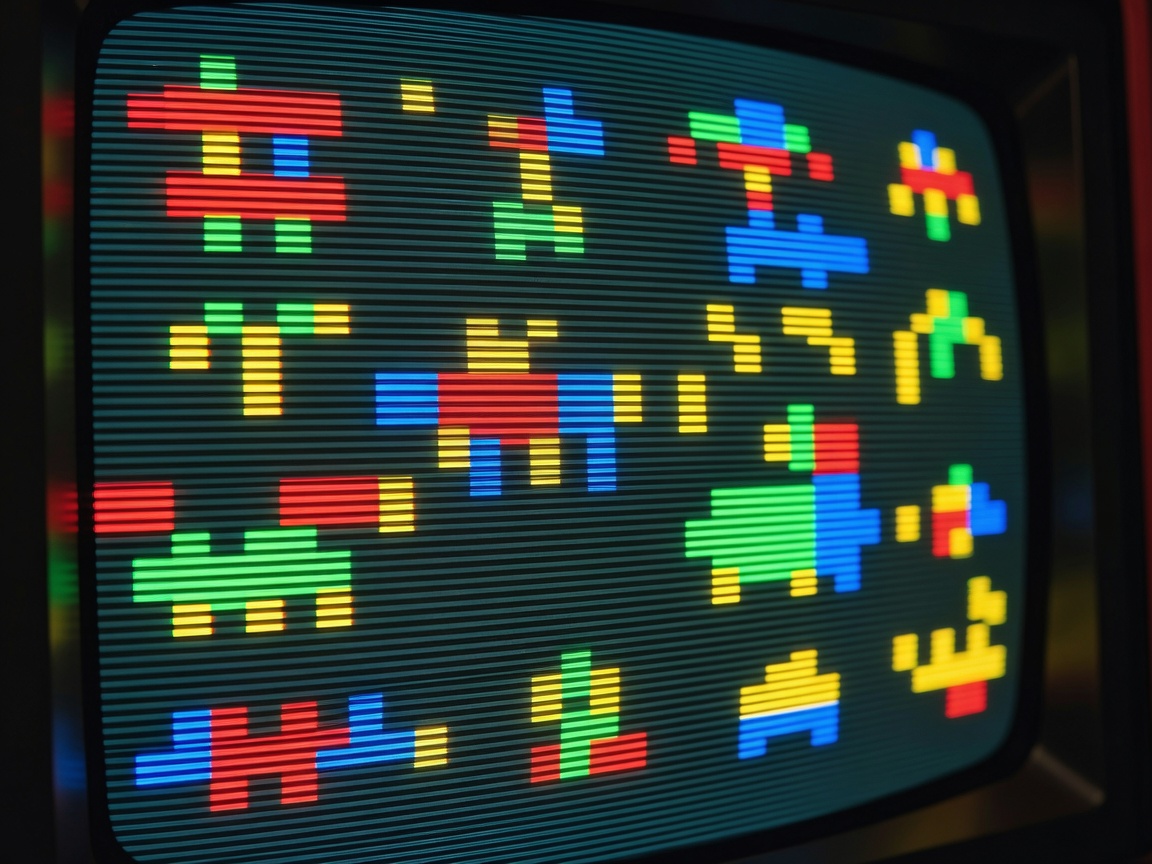
When viewing games like Street Fighter II or Metal Slug on an authentic CRT monitor, the black spaces between scanlines (the blanking interval) create natural contrast and spatial antialiasing. Furthermore, the quick glow and fade of P22 phosphors smooths fast-scrolling backgrounds without introducing motion blur hardware artifacts.
3. MODERN SCALERS: THE RETROTINK-4K BREAKTHROUGH
By 2026, FPGA-based video processors have achieved near-perfect emulation of CRT display dynamics. Hardware scalers sample 15kHz RGB signals, line-double them to 4K resolution, and overlay sub-pixel shadow mask filters with sub-1ms buffering lag.
- Native CRT Advantages: True zero input lag, perfect viewing angles, authentic phosphor decay, original hardware fidelity.
- Modern Scaler Advantages: Zero maintenance requirement, no high-voltage discharge risks, immunity to magnetic interference, lower power consumption.
4. CONCLUSION & RECOMMENDATION
For purists and arcade museums, maintaining original Wells-Gardner, Electrohome, and Nanao CRT chassis remains essential for historical accuracy. However, for public arcades seeking low maintenance costs, modern 4K OLED displays paired with FPGA line multipliers provide a robust, long-lasting alternative.